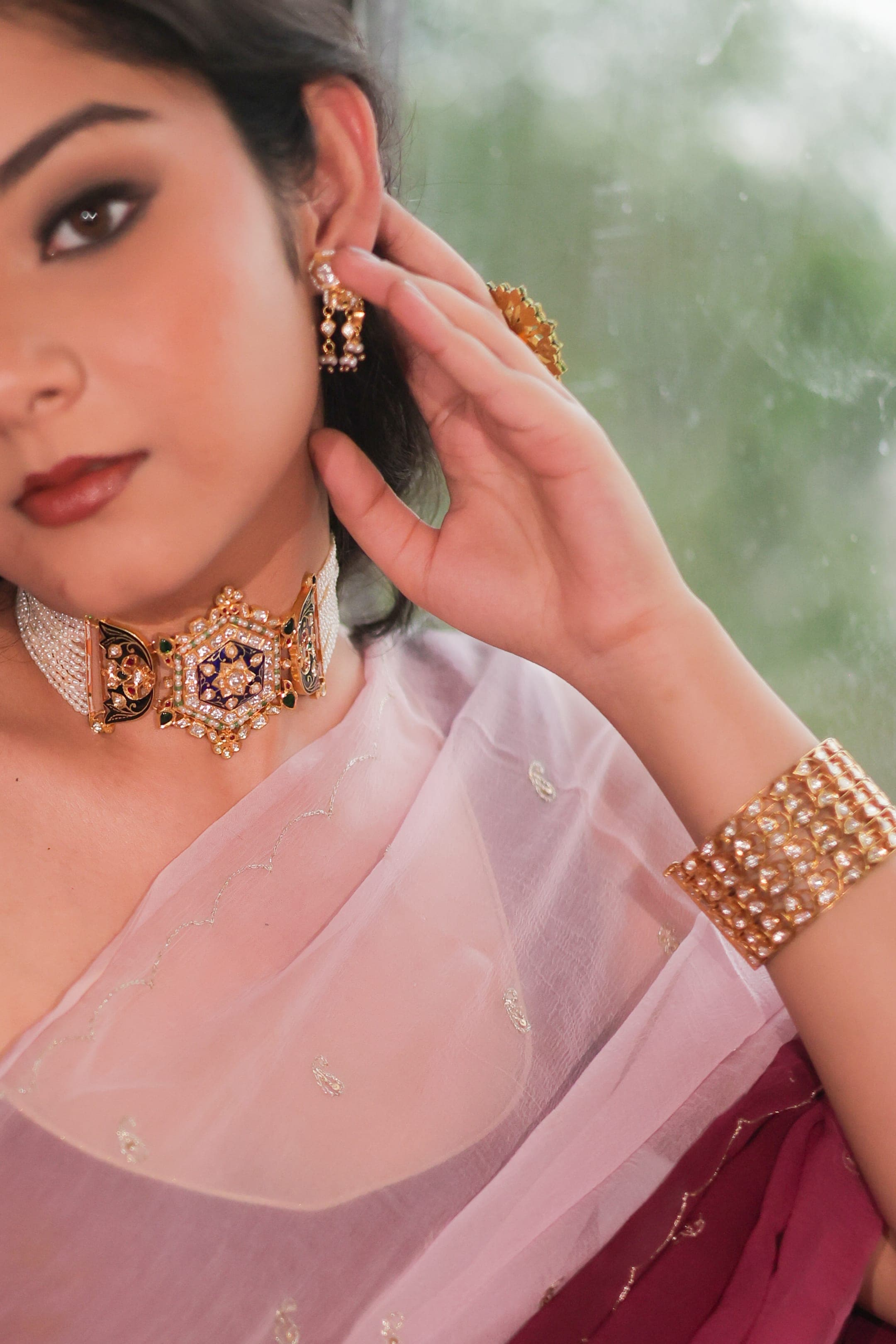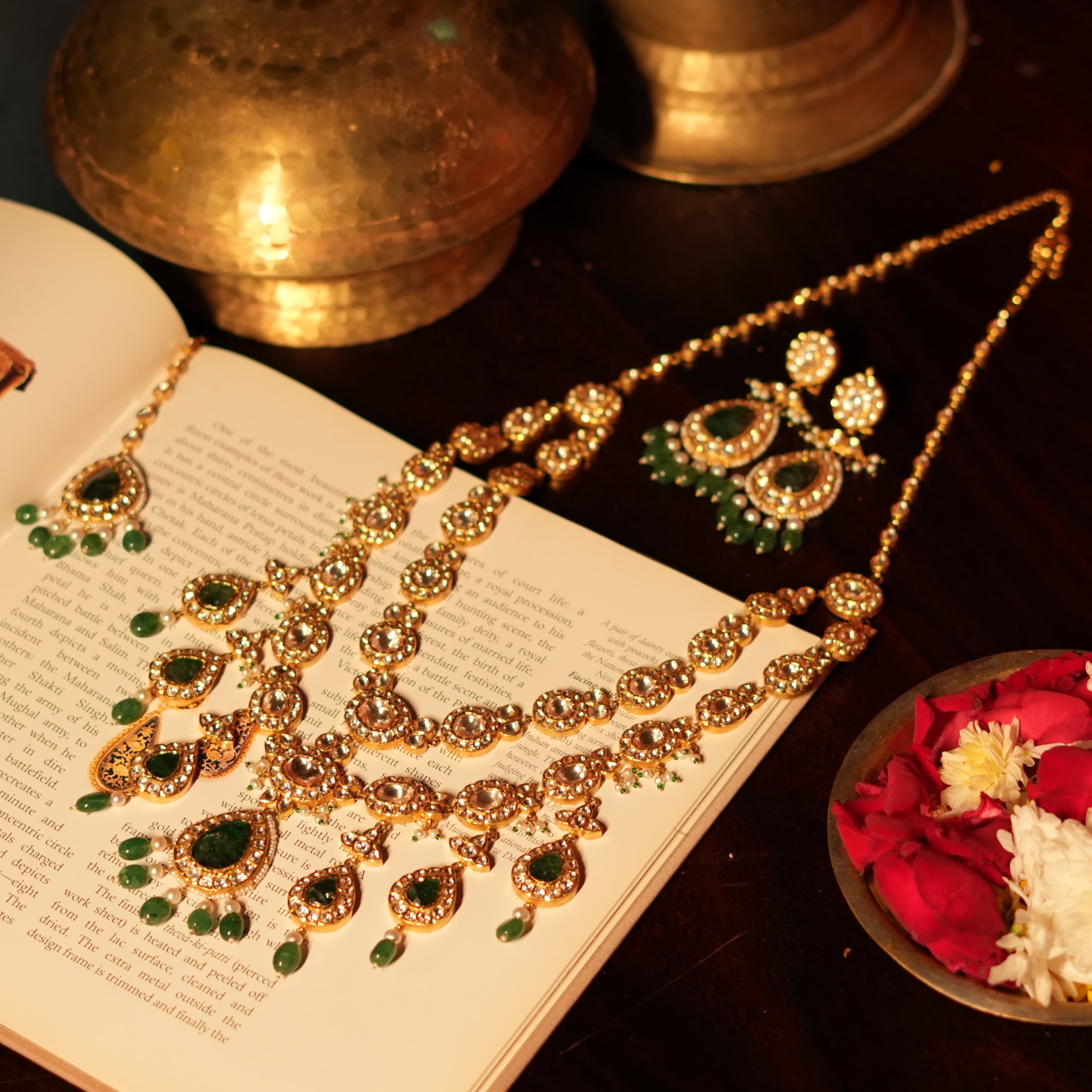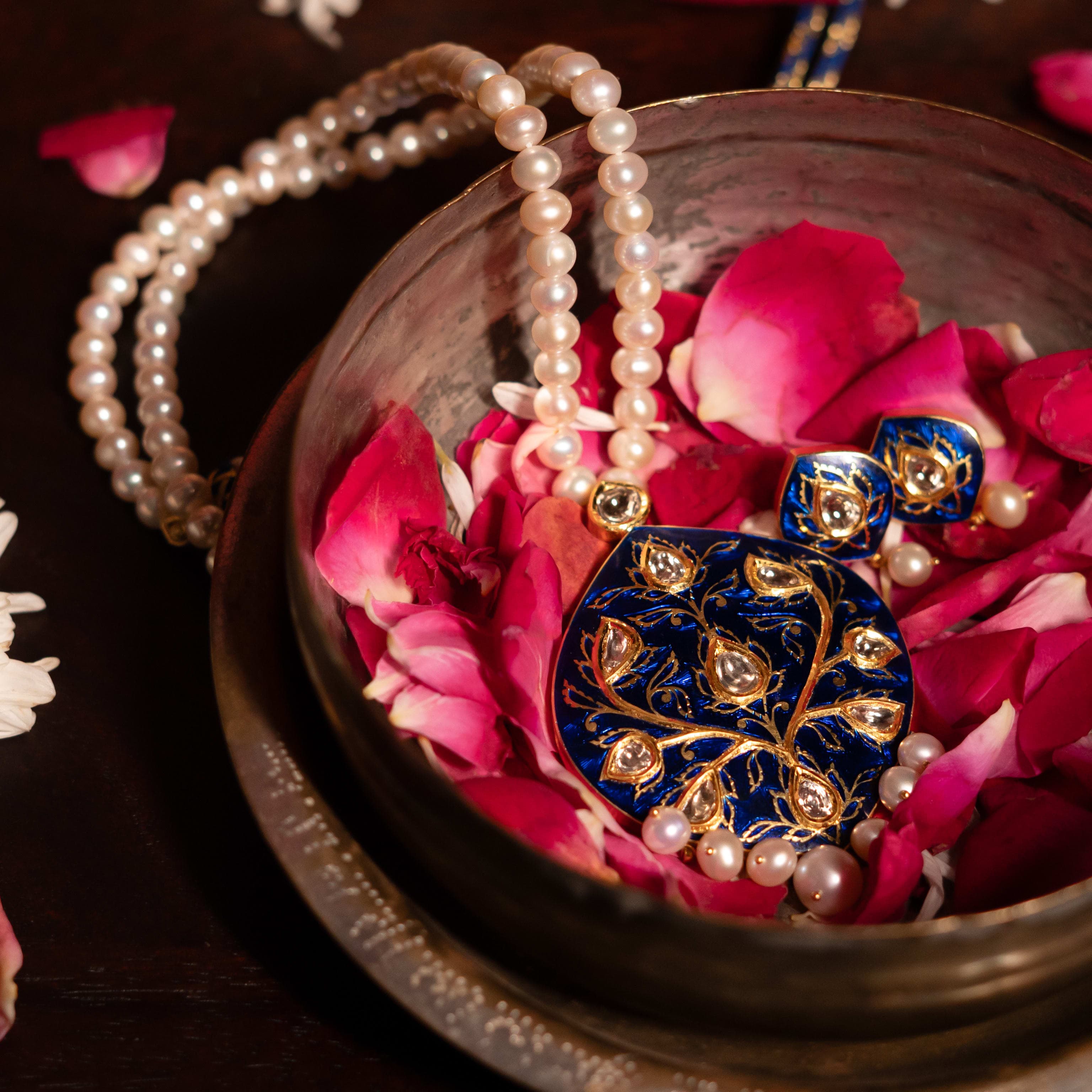
The word karkhana translates roughly to "workshop," but that English word entirely fails to capture what a Jodhpur jadau karkhana really is. It is part atelier, part guild, part living museum - a space where five or six specialist artisans work together on a single piece of jewellery, each contributing a skill that has been honed over generations. To step inside a karkhana is to step into a process that has remained fundamentally unchanged for four hundred years.
The Team Inside a Karkhana
Unlike modern jewellery manufacturing, where a single machine can perform multiple operations, a karkhana operates on the principle of specialisation. Each artisan is a master of one specific discipline, and a single piece passes through several hands before completion:
The Designer (Chittera) - Every piece begins with a sketch. The chittera translates a client's vision or a traditional motif into a precise drawing that serves as the blueprint for the entire piece. This drawing specifies proportions, stone placement, and structural details. Master chitteras work from memory as much as from reference, drawing on a mental library of hundreds of traditional patterns.
The Goldsmith (Ghadiya) - The ghadiya takes the drawing and brings it to life in gold. Using hammers, anvils, and hand tools that have changed little over centuries, the ghadiya shapes 22KT or 24KT gold into the skeletal framework of the piece. This process - called ghadayi - is the foundation upon which everything else is built. The precision of the ghadiya's work determines whether the final piece sits correctly, balances properly, and provides secure seats for every stone.
The Engraver (Khudai Karigar) - Once the gold frame is formed, the engraver carves fine grooves, cavities, and decorative patterns into the surface. These grooves serve both aesthetic and functional purposes - they create beds for the stones and channels for the enamel work that will follow.
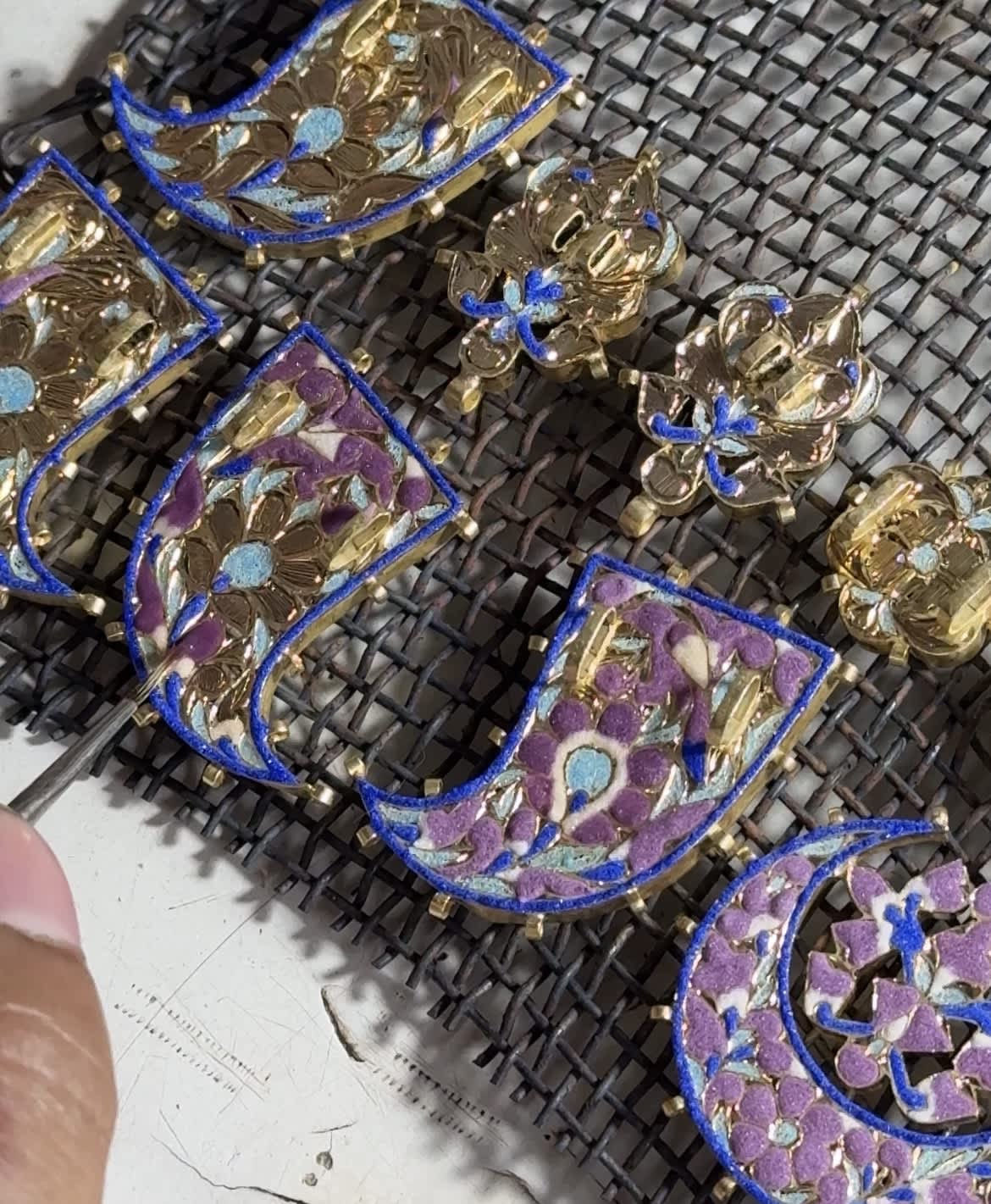
The Enameller (Meenakar) - The meenakar is responsible for the meenakari - the hand-painted enamel work that adorns the reverse of jadau jewellery. Using a fine brush and powdered glass in mineral-derived colours, the meenakar fills the engraved grooves with enamel, then fires the piece in a kiln. Each colour has a different melting point, so a multi-coloured meenakari design requires multiple firings, each progressively more delicate.
The Stone Setter (Jadia) - The jadia is perhaps the most critical artisan in the process. Using lac (a natural resin) heated over a small flame, the jadia sets each polki diamond and gemstone into the gold framework. The stone is placed on a bed of warm lac, and the surrounding gold is carefully pressed inward to grip the stone. No prongs, no claws, no adhesive - just the skill of the jadia's hands and the malleability of pure gold. A single error can crack a stone or ruin hours of prior work.
The Polisher (Jhala Karigar) - The final artisan in the chain, the polisher, gently buffs and polishes the completed piece to bring out the warmth of the gold and the lustre of the stones. This must be done with extreme care to avoid disturbing the stone settings or damaging the meenakari.
The Design Phase
Before any gold is touched, the design must be finalised. In a traditional karkhana, this is a collaborative process between the client (or the jeweller representing the client) and the chittera. For bridal commissions, the process begins with understanding the bride's outfits, her family's aesthetic preferences, and the specific ceremonies the pieces will be worn for.
The chittera may produce several iterations of a design, adjusting proportions, stone placement, and overall weight until the design is approved. Only then does the piece move to the ghadiya.
Ghadayi: Forming the Gold
The ghadayi stage is where the piece begins to take physical form. The ghadiya melts pure gold and forms it into sheets and wires of varying thickness. Using hand tools - many of which are themselves generations old - the ghadiya hammers, bends, and shapes the gold into the framework of the piece.
This is painstaking, physical work. A complex necklace framework might take a skilled ghadiya several days to complete. Every curve, every junction, every hinge must be precisely formed, because any structural weakness at this stage will compromise the entire piece.
Meenakari: The Hidden Canvas
Once the gold framework is complete and engraved, it passes to the meenakar. The meenakari stage is where the reverse of the piece comes alive with colour. Traditional Jodhpuri meenakari uses a palette dominated by red, green, white, and blue, with each colour requiring its own firing.
The meenakar works with the piece face-down, painting the back surface that most people will never see. This investment in hidden beauty is one of the defining characteristics of genuine jadau jewellery - and one of the reasons it commands the respect it does.
Jadai: Setting the Stones
The final and most nerve-wracking stage is the stone setting. The jadia works with a small flame, a ball of lac, and a steady hand. Each polki diamond is individually placed, positioned, and secured by pressing the surrounding gold inward with a fine tool. The lac underneath acts as both a cushion and an adhesive, holding the stone in place while the gold grip is formed.
A complex bridal necklace may contain hundreds of individual polki stones, each requiring its own careful setting. The jadia must work quickly enough to keep the lac workable but slowly enough to ensure each stone is perfectly positioned. This is craftsmanship at its most demanding.
How Long Does It Take?
A single bridal set - comprising a necklace, earrings, maang tikka, and bangles - typically takes four to eight weeks to complete, depending on the complexity of the design. During that time, the piece may pass through the hands of six or more artisans, each adding their layer of skill and artistry.
This timeline is not a limitation - it is a feature. Every week of work represents expertise, care, and attention that no machine can replicate. When you hold a finished jadau piece, you hold hundreds of hours of human skill.
The SHRIVATSA Karkhana
At SHRIVATSA, our karkhana in Jodhpur operates in this traditional manner. Our karigars are not employees working shifts - they are artisan families who have practised these specific crafts for generations. We believe that the integrity of the process is inseparable from the integrity of the product. When you commission a piece from SHRIVATSA, it is made in a karkhana where four hundred years of tradition are alive in every hammer stroke, every brush of enamel, and every stone set into gold.