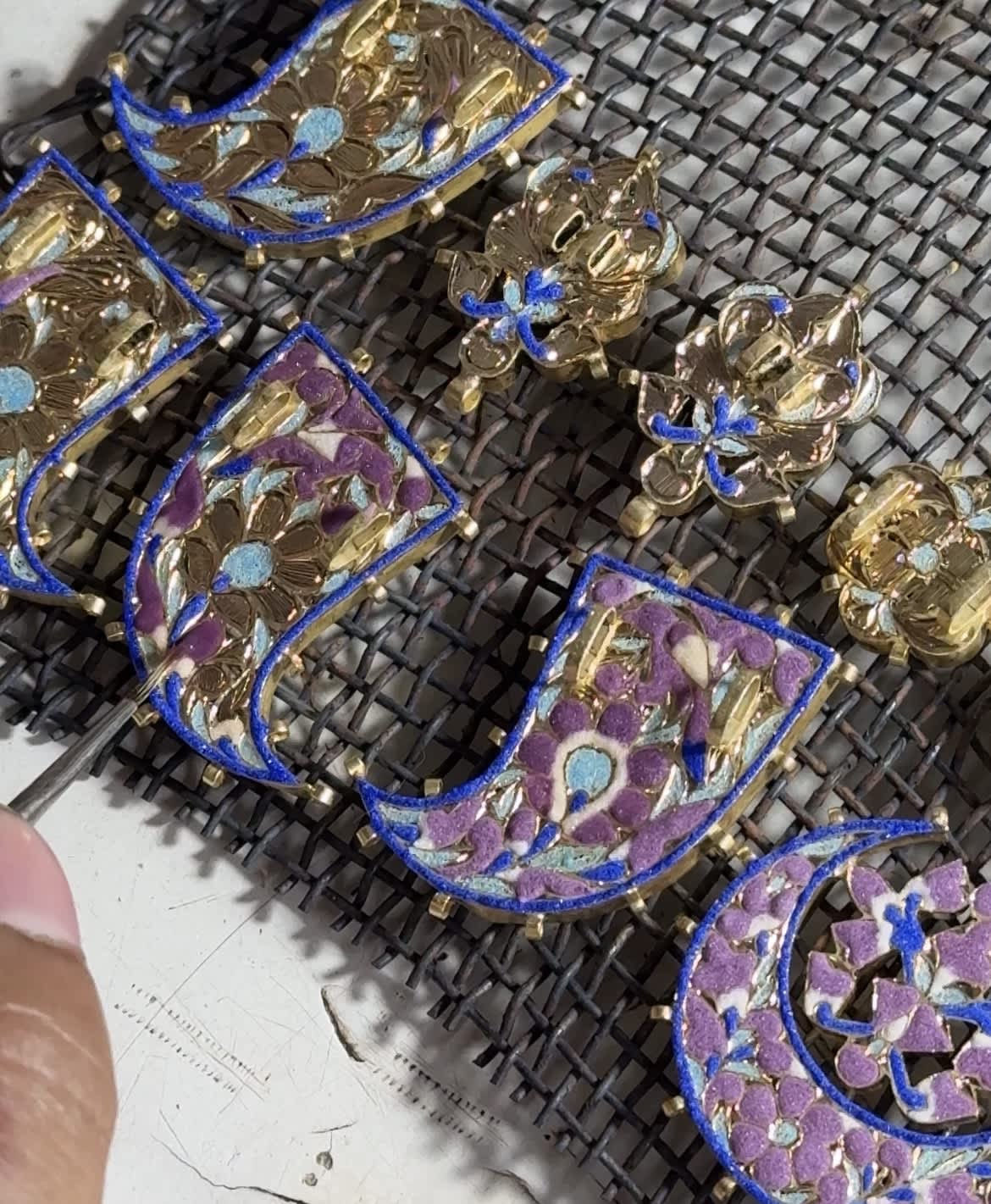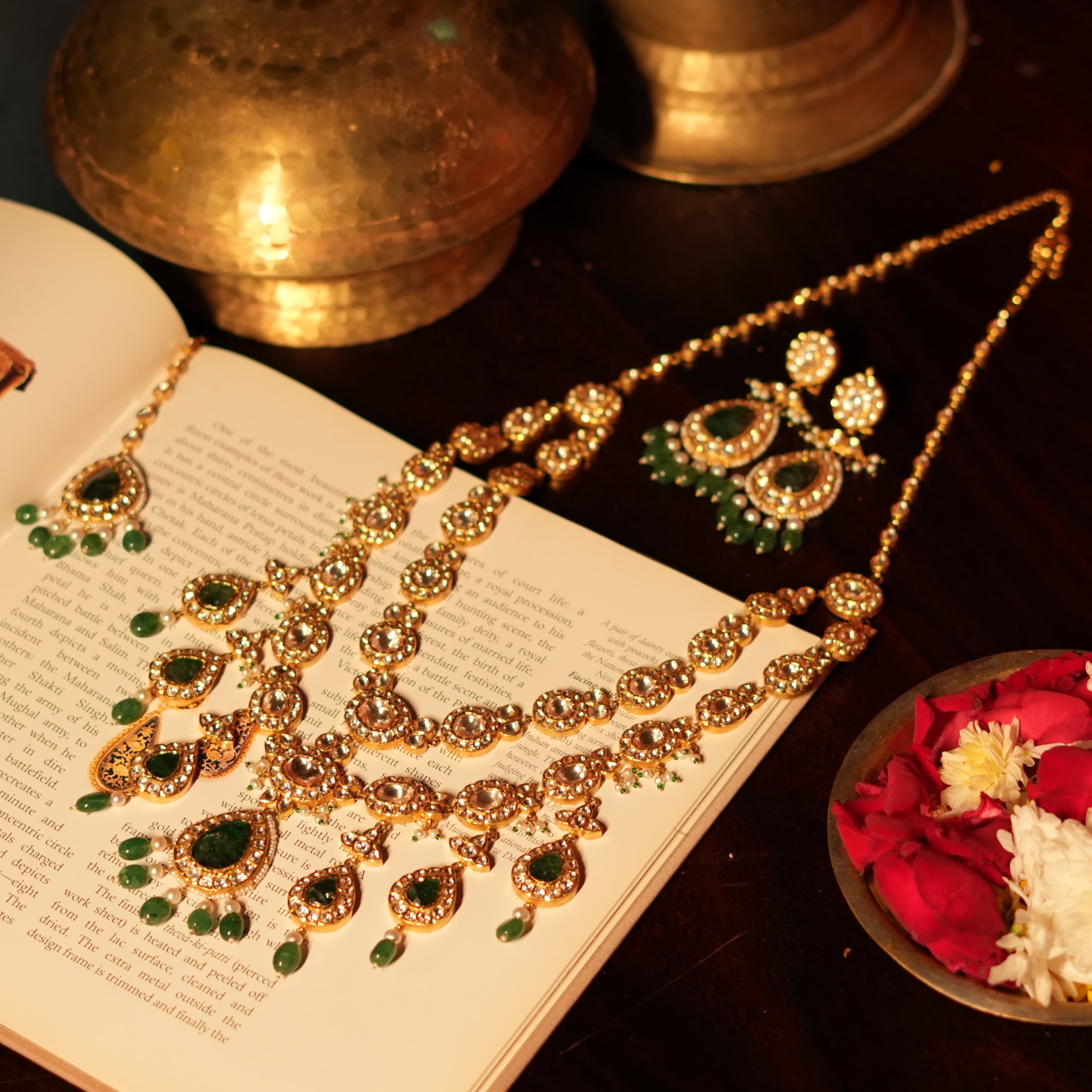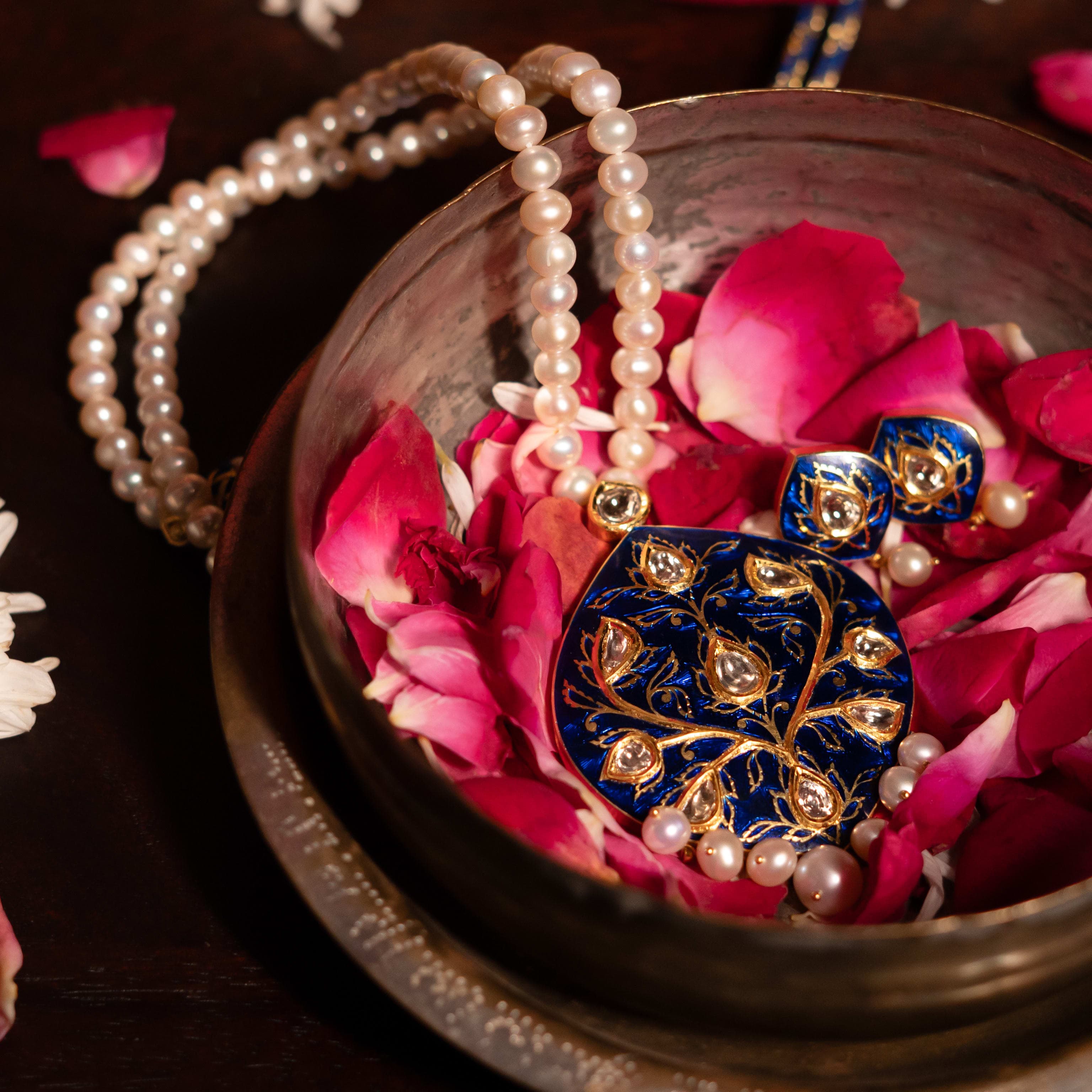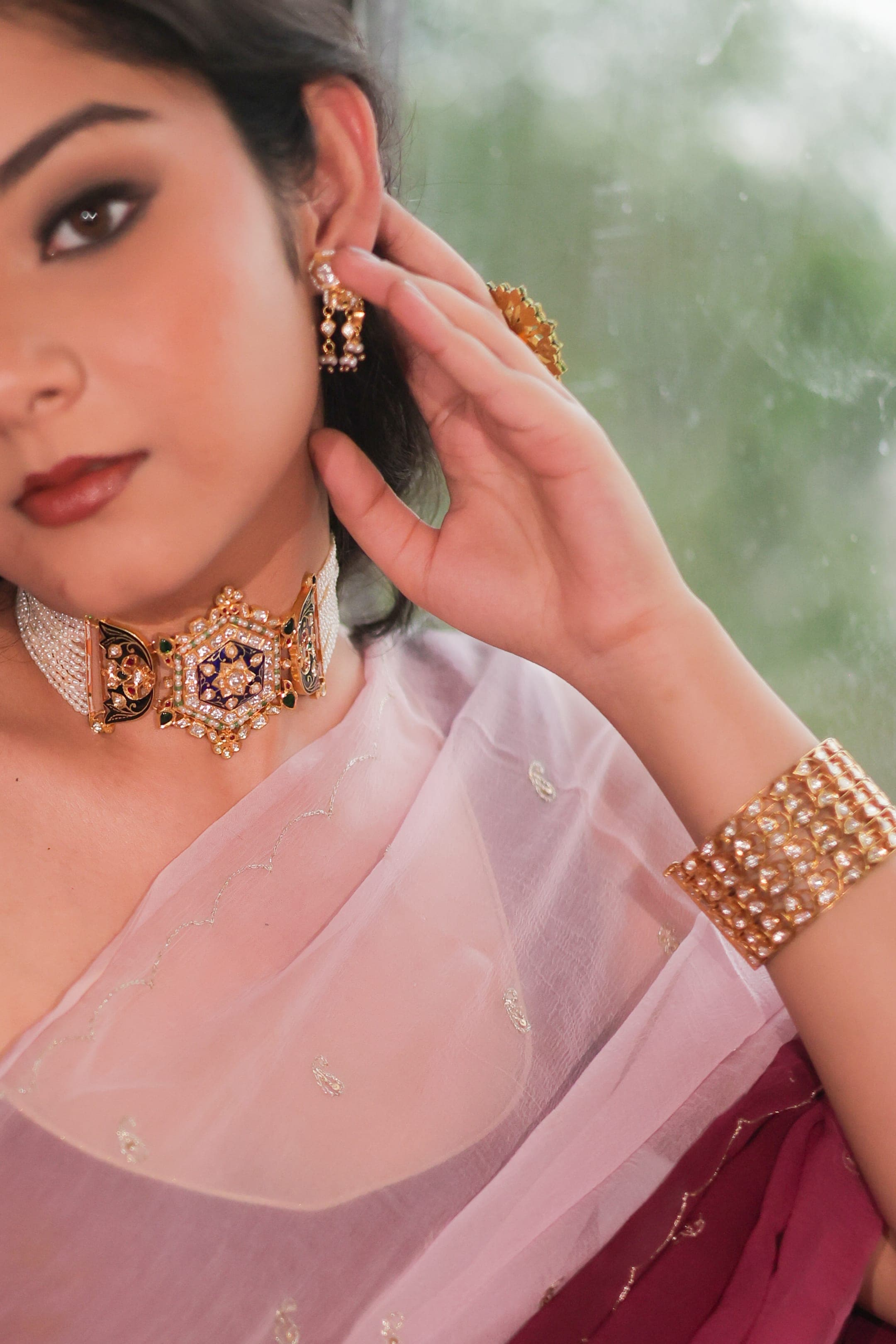
There is a beautiful irony at the heart of meenakari: the most labour-intensive, colourful, and expressive element of a jadau piece is the part that faces away from the world. The reverse of a fine necklace or earring, hidden against the wearer's skin, is often where the greatest artistry lies.
What Is Meenakari?
Meenakari (also spelled minakari) is the art of hand-painting enamel onto metal, typically gold. The word comes from the Persian mina, meaning heaven or azure - a reference to the vivid blue enamels that were among the earliest colours used in this technique.
The process involves filling engraved grooves in the gold surface with powdered glass in various colours, then firing the piece in a kiln at precise temperatures. Each colour has a different melting point, so multi-coloured meenakari requires multiple firings, each more delicate than the last.
The Colours of Meenakari
Traditional Rajasthani meenakari uses five primary colours, each derived from natural mineral compounds:
Red - The most prized and difficult colour, achieved through iron oxide. A deep, ruby-like red is the hallmark of master meenakari work.
Green - Copper-based, ranging from emerald to sage depending on the formulation.
White - Tin oxide creates a clean, opaque white that provides contrast and definition.
Blue - Cobalt-based, echoing the original Persian inspiration for the art form.
Pink - A softer variant often used in contemporary designs, achieved by adjusting the red formulation.
Why the Reverse Matters
In Rajasthani jewellery tradition, the beauty of the reverse is a mark of quality and integrity. It signals that the maker cared as much about what is unseen as what is displayed. At SHRIVATSA, every jadau piece features hand-painted meenakari on the reverse - a hidden gift for the wearer and a testament to our craft philosophy.