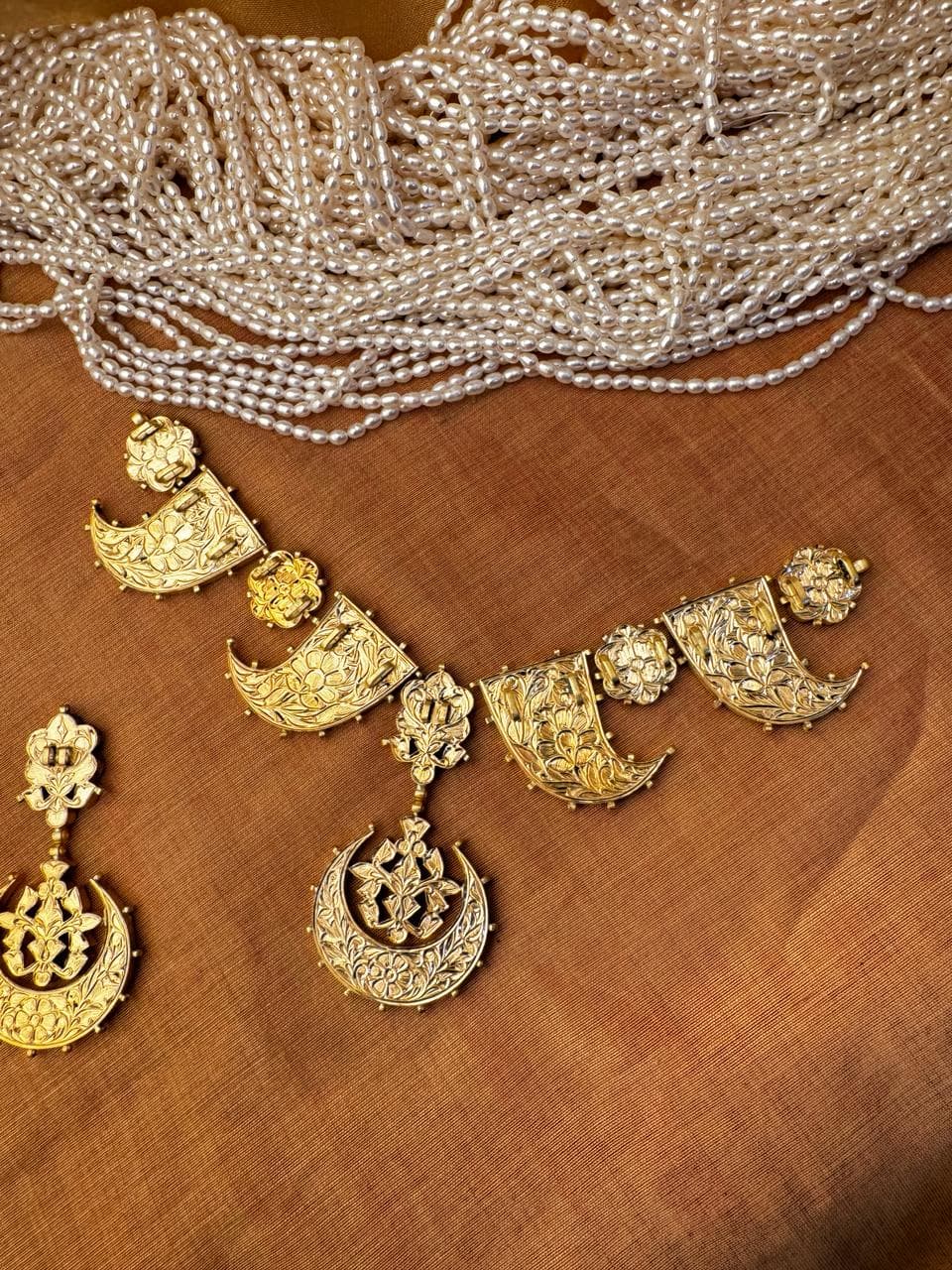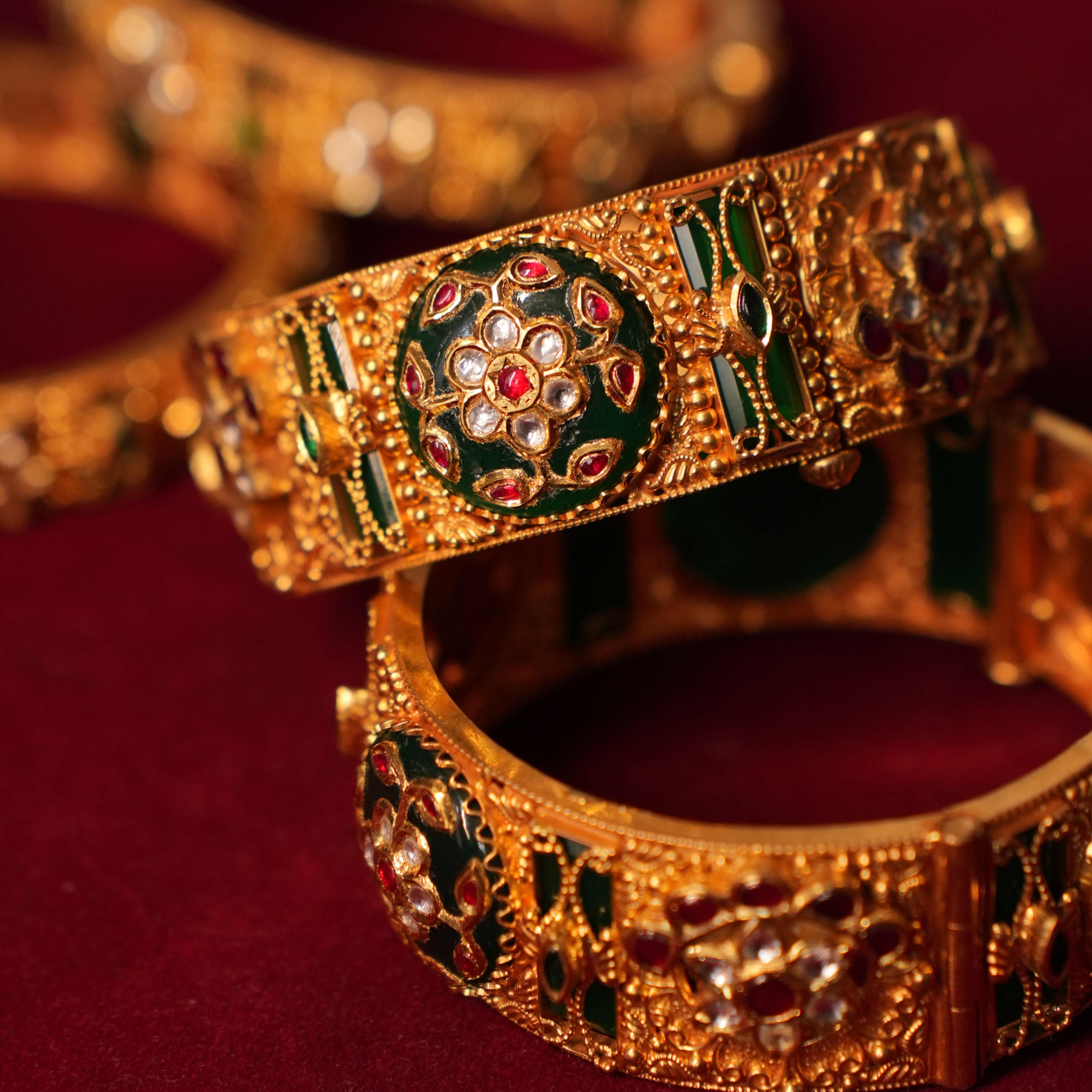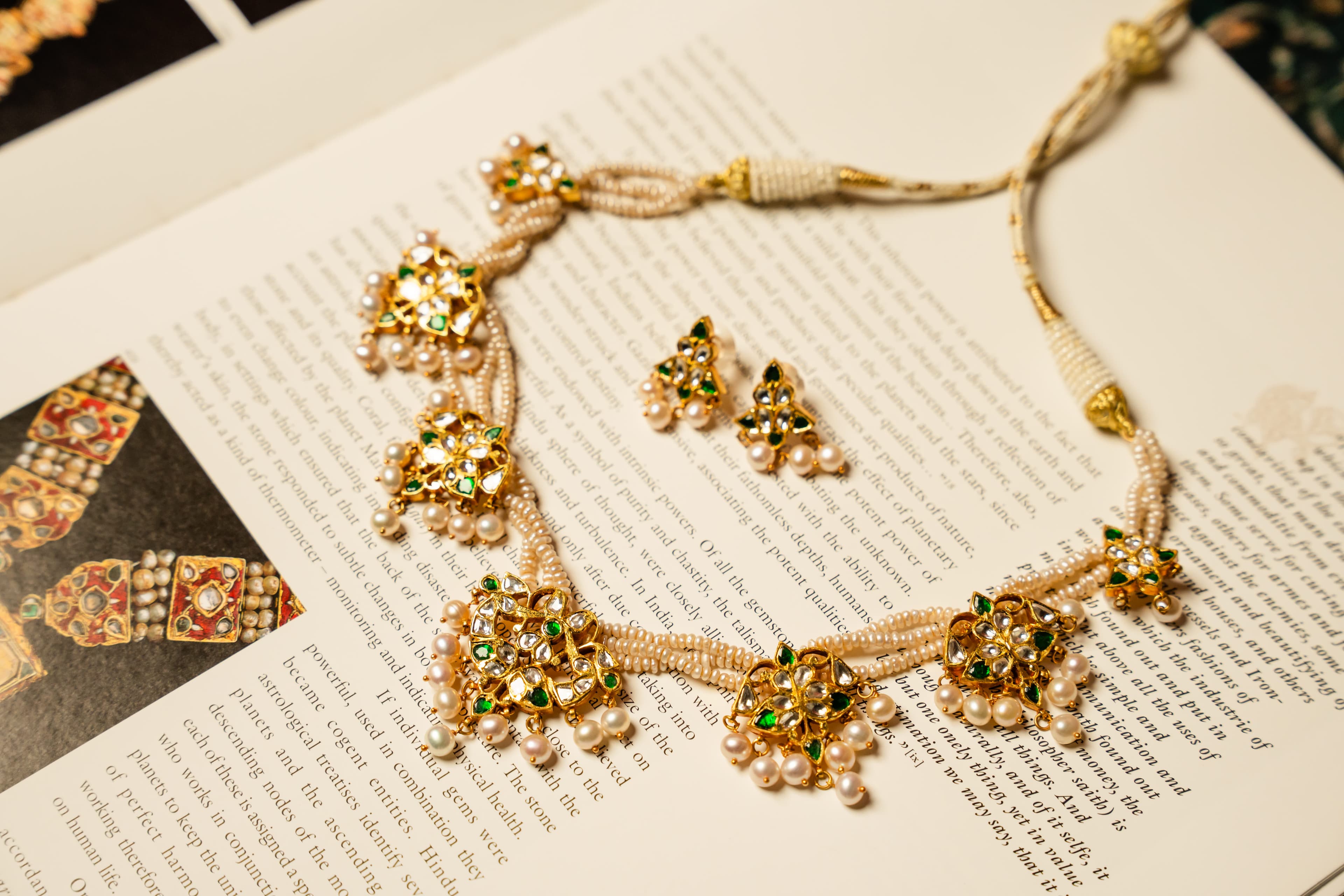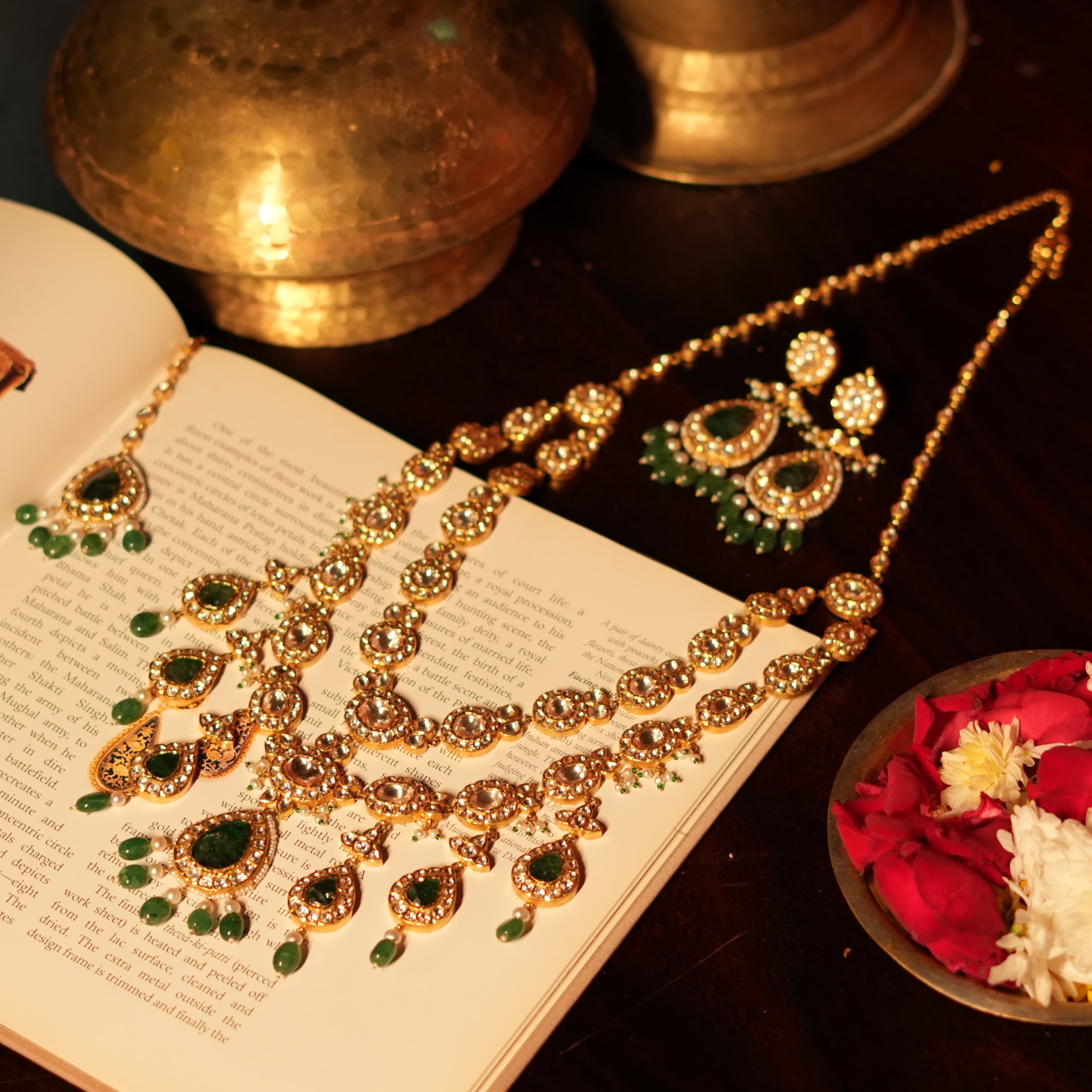
Jadau is not merely a jewellery-making technique - it is a living art form that has been passed down through generations of karigars in the royal courts of Rajasthan. The word itself derives from the process of embedding precious and semi-precious stones into a gold framework without the use of prongs or claws, relying instead on the malleability of pure gold and the skill of the craftsman.
Origins in the Mughal Courts
The art of jadau is believed to have been brought to the Indian subcontinent by Mughal artisans in the 16th century. It quickly found patronage among the Rajput royals, who commissioned elaborate pieces for weddings, coronations, and diplomatic gifts. The city of Jodhpur, with its deep connections to Marwar craftsmanship, became one of the most important centres for this art.
Unlike Western jewellery traditions that rely on mechanical settings, jadau work is entirely handcrafted. The karigar works with 24-karat gold, heating it until it becomes soft enough to wrap around each stone. This process, known as paadh, creates a seamless bond between metal and gem that is both secure and breathtakingly beautiful.
The Five Stages of Jadau
Every jadau piece passes through five distinct stages, each handled by a specialist artisan:
Ghaat - The gold base is shaped and hammered into the desired form. This skeletal frame determines the proportions and silhouette of the final piece.
Khudai - Fine grooves and cavities are carved into the gold to create beds for the gemstones. The precision of this step determines how securely the stones will sit.
Paadh - Lac (a natural resin) is applied behind each stone, and the surrounding gold is carefully pressed inward to hold the gem in place. No adhesive or mechanical setting is used.
Meenakari - The reverse of the piece is adorned with hand-painted enamel work in vivid colours - typically reds, greens, and whites. This hidden beauty is a hallmark of true jadau craftsmanship.
Polishing - The completed piece is gently polished to bring out the warmth of the gold and the fire of the stones, without disturbing the delicate settings.
Why Jadau Endures
In an age of mass production and CAD-designed jewellery, jadau represents something increasingly rare: a craft where every piece is unique, every stone is hand-selected, and every setting bears the fingerprint of its maker. At SHRIVATSA, we work directly with master karigars whose families have practised this art for over four generations.
When you wear a jadau piece, you wear centuries of history, skill, and devotion. It is not simply jewellery - it is heritage made tangible.