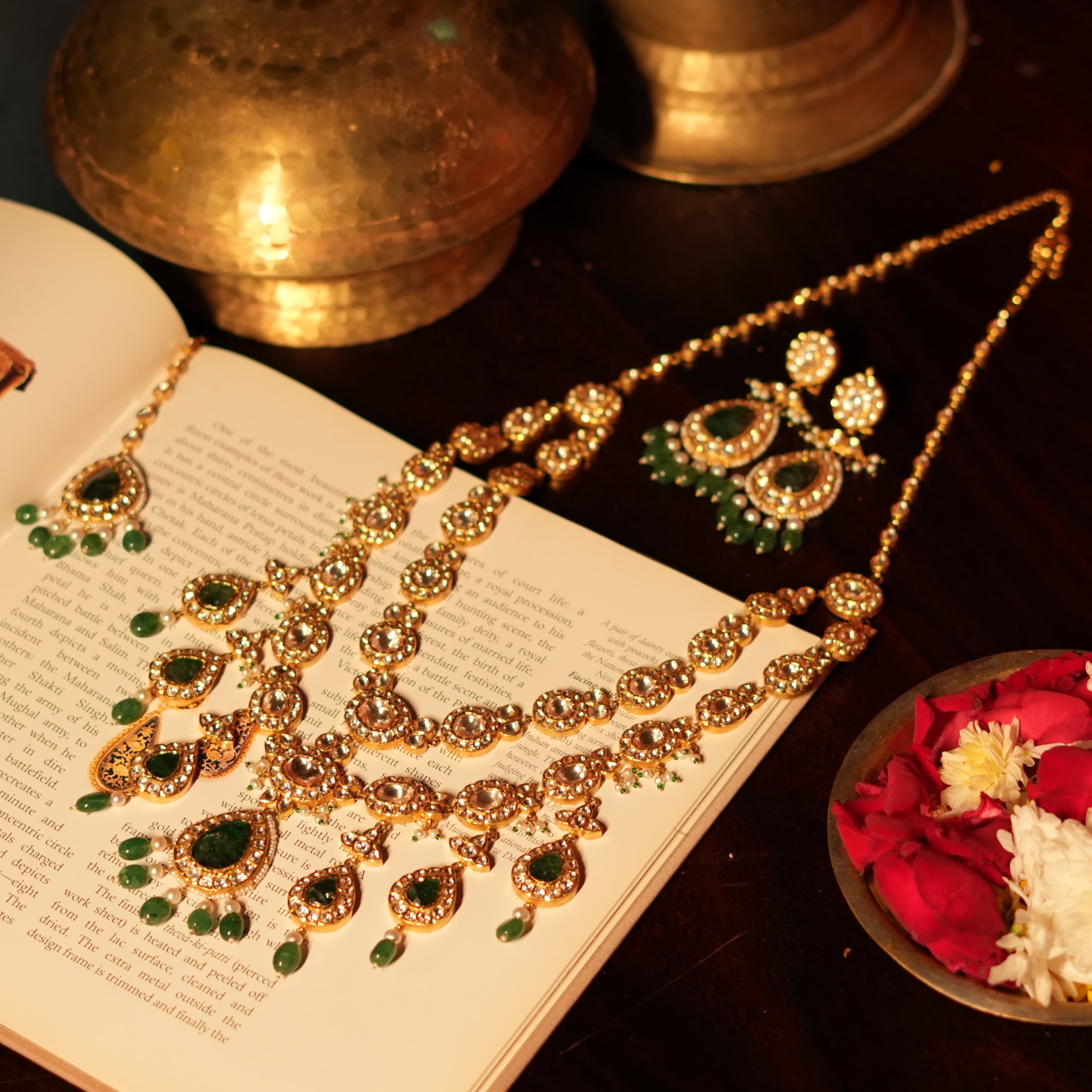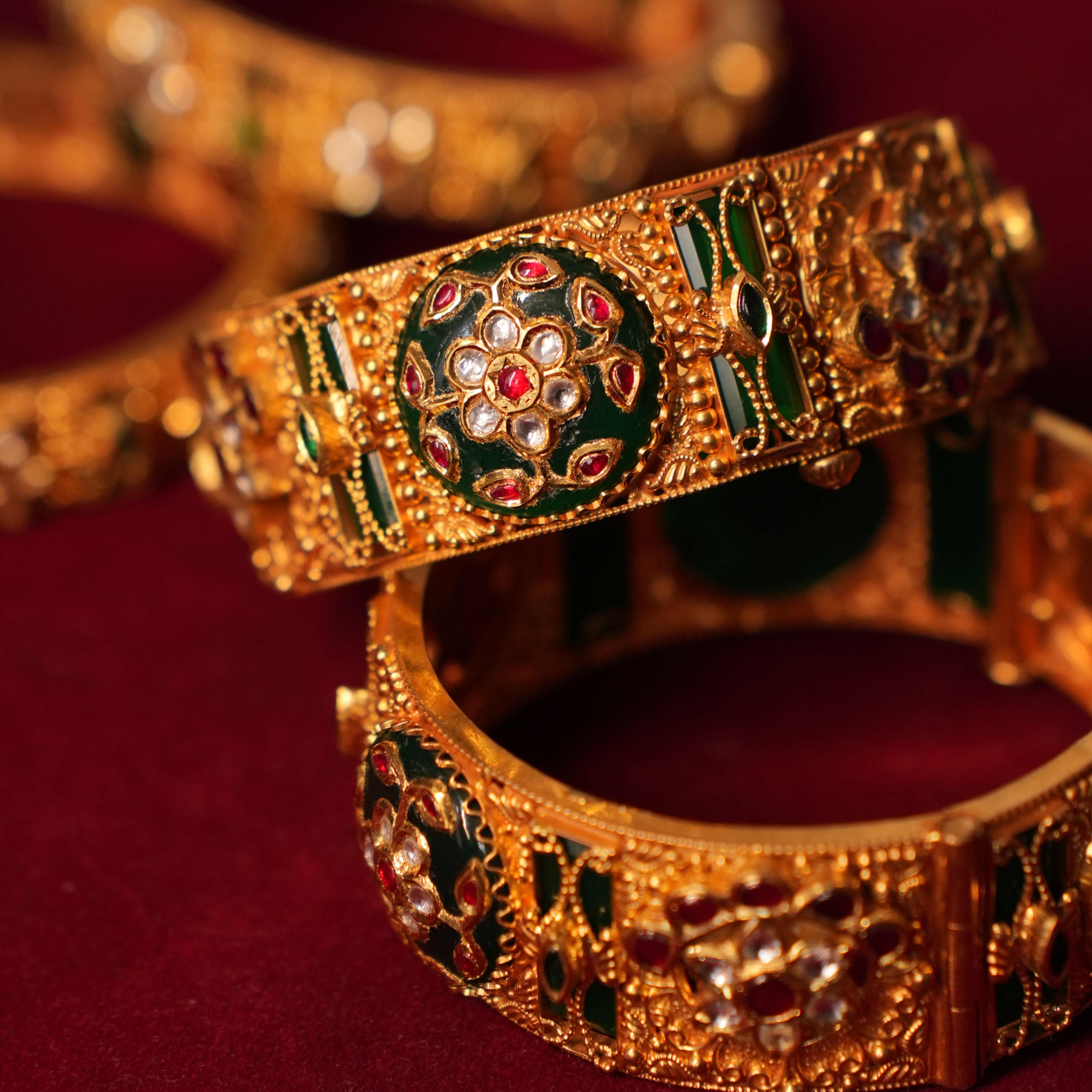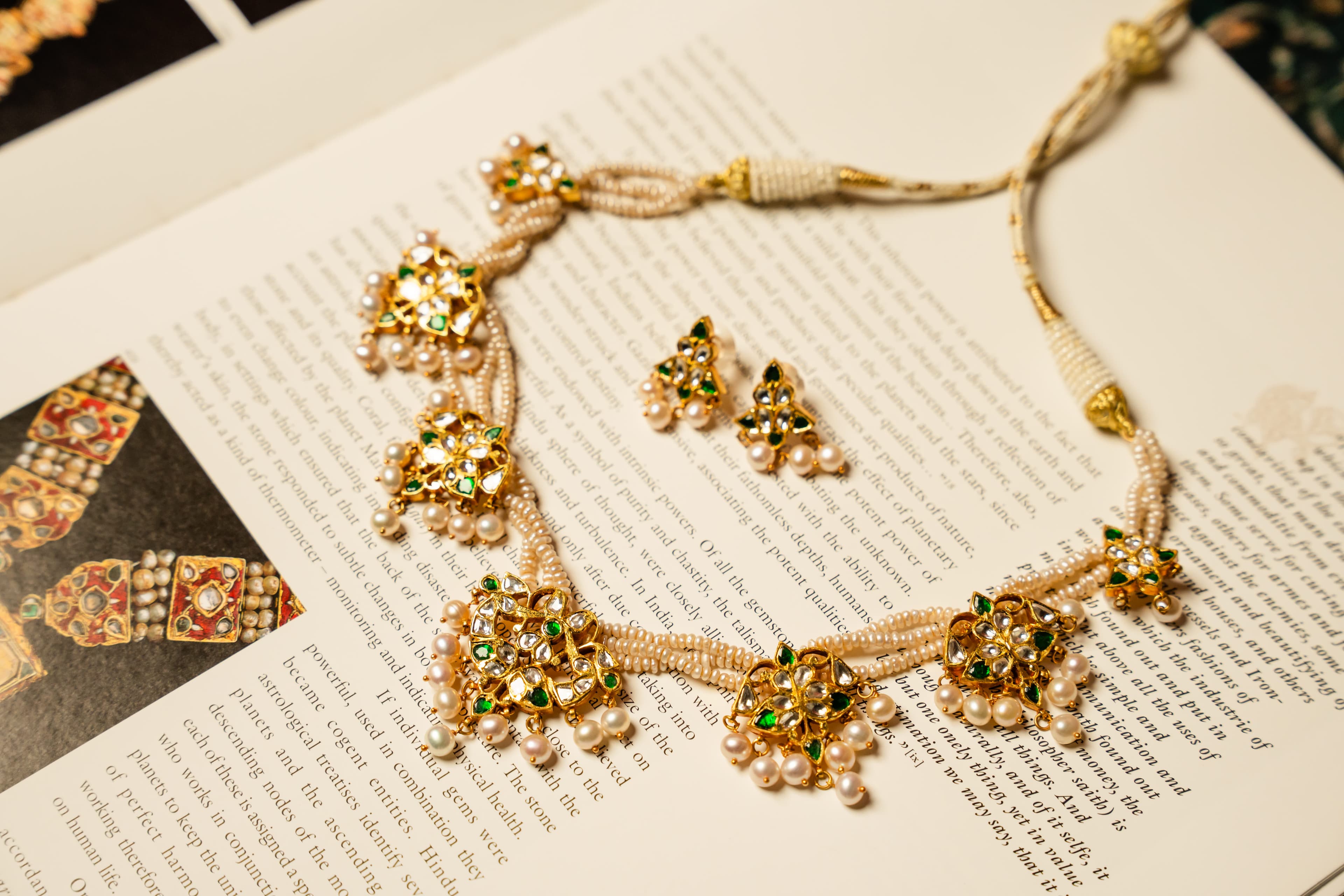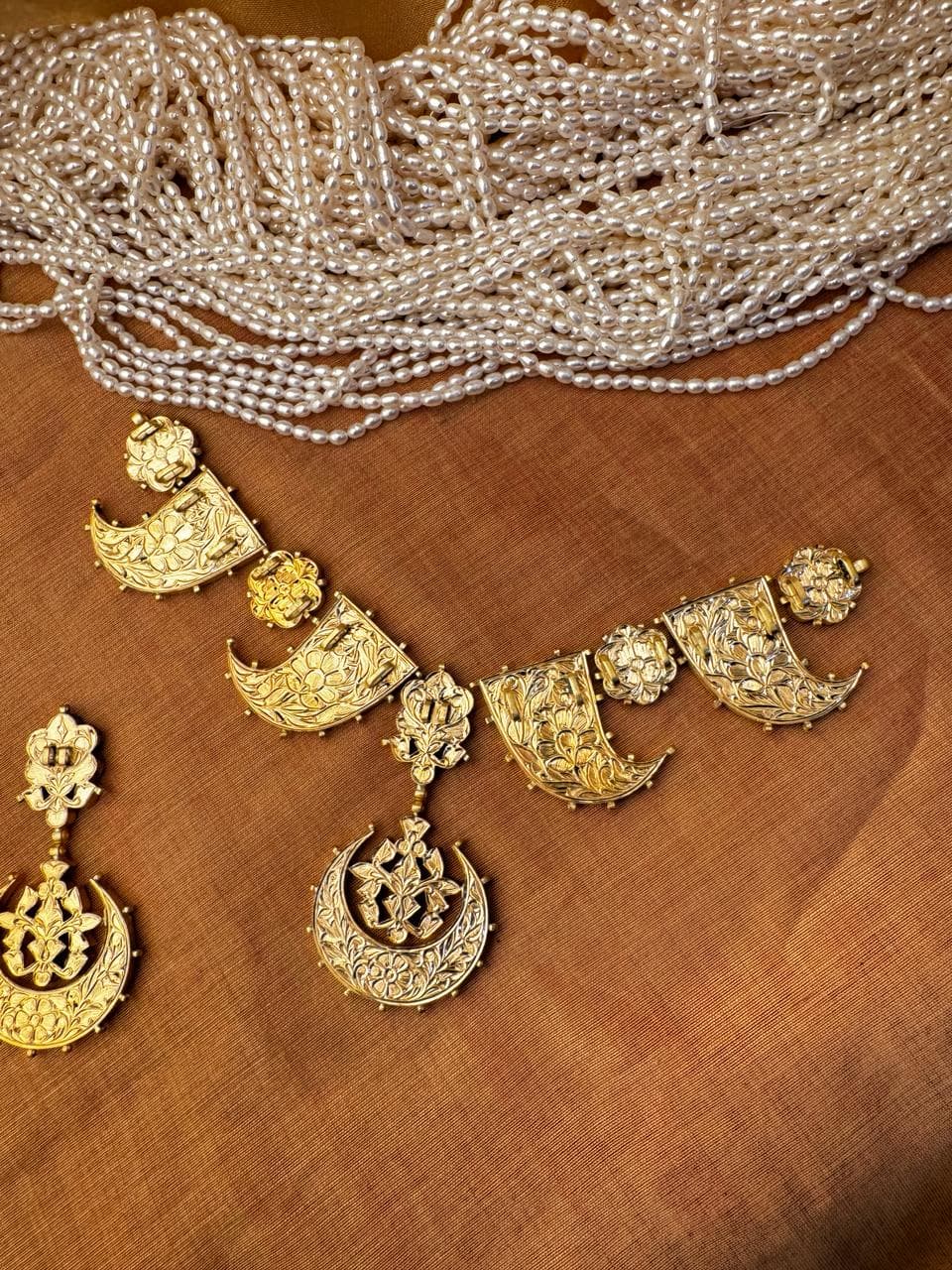
Walk into any jewellery exhibition in India and you will hear the terms polki and kundan used almost interchangeably. Yet they refer to fundamentally different things - one describes a type of stone, the other a setting technique. Understanding the distinction is essential for any serious jewellery buyer.
What Is Polki?
Polki refers to uncut, natural diamonds that are used in their raw, flat form without the faceting and cutting that characterises modern brilliant-cut diamonds. These stones have a soft, organic lustre - less fiery than a cut diamond, but with a warmth and depth that is entirely their own.
Polki diamonds are one of the oldest forms of diamond jewellery in the world. Before the invention of diamond-cutting techniques in Europe, Indian jewellers were already setting these natural crystals into elaborate gold frameworks.
What Is Kundan?
Kundan is a setting technique, not a type of stone. It refers to the method of setting stones - whether polki diamonds, glass, or other gems - into a gold framework using refined gold foil (kundan) to hold them in place. The word kundan literally means "pure gold."
In kundan work, thin strips of highly refined gold are pressed between the stone and its gold casing to create a tight, seamless setting. This is different from jadau, where the gold itself is moulded around the stone.
The Practical Difference
Here is the simplest way to remember it:
Polki = the stone (uncut, natural diamond)
Kundan = the setting method (using gold foil to secure stones)
You can have polki diamonds set using the kundan technique. You can also have glass or coloured stones set in kundan. The two terms describe different aspects of the same piece.
At SHRIVATSA
We work exclusively with natural polki diamonds - never glass substitutes. Our karigars use both kundan and jadau techniques depending on the design, always prioritising the integrity of the stone and the longevity of the piece. When you purchase from us, you can be certain of what you are getting.