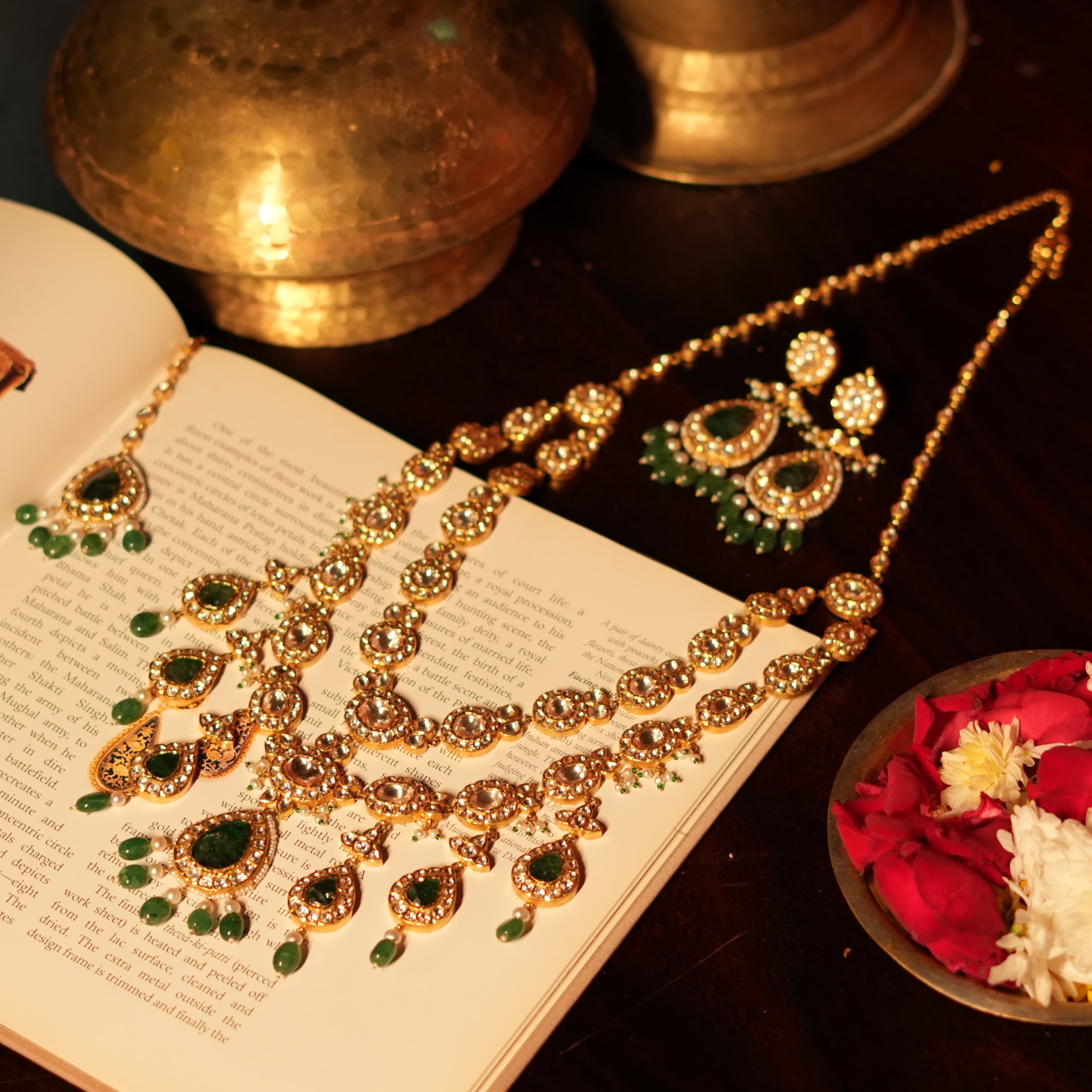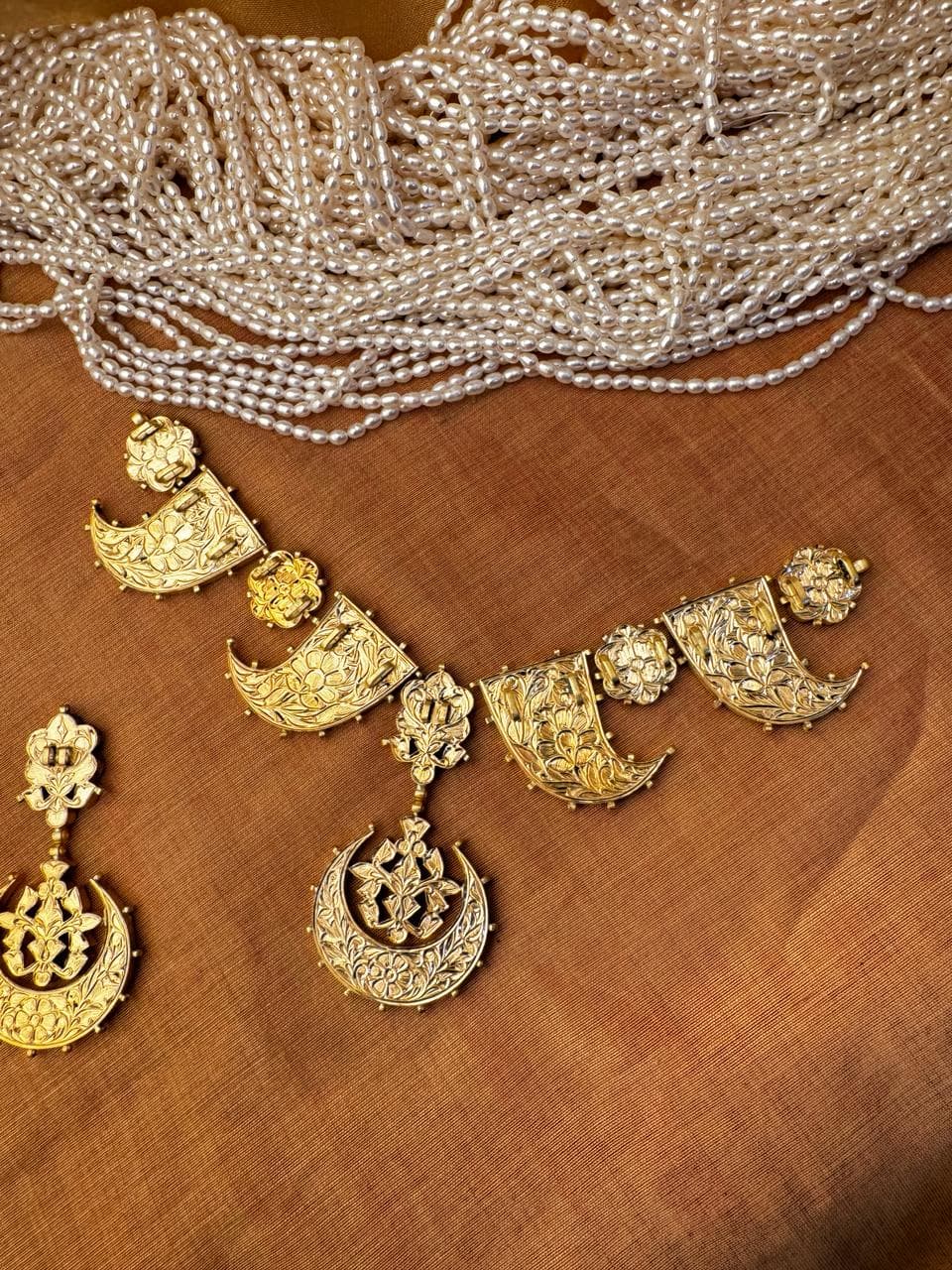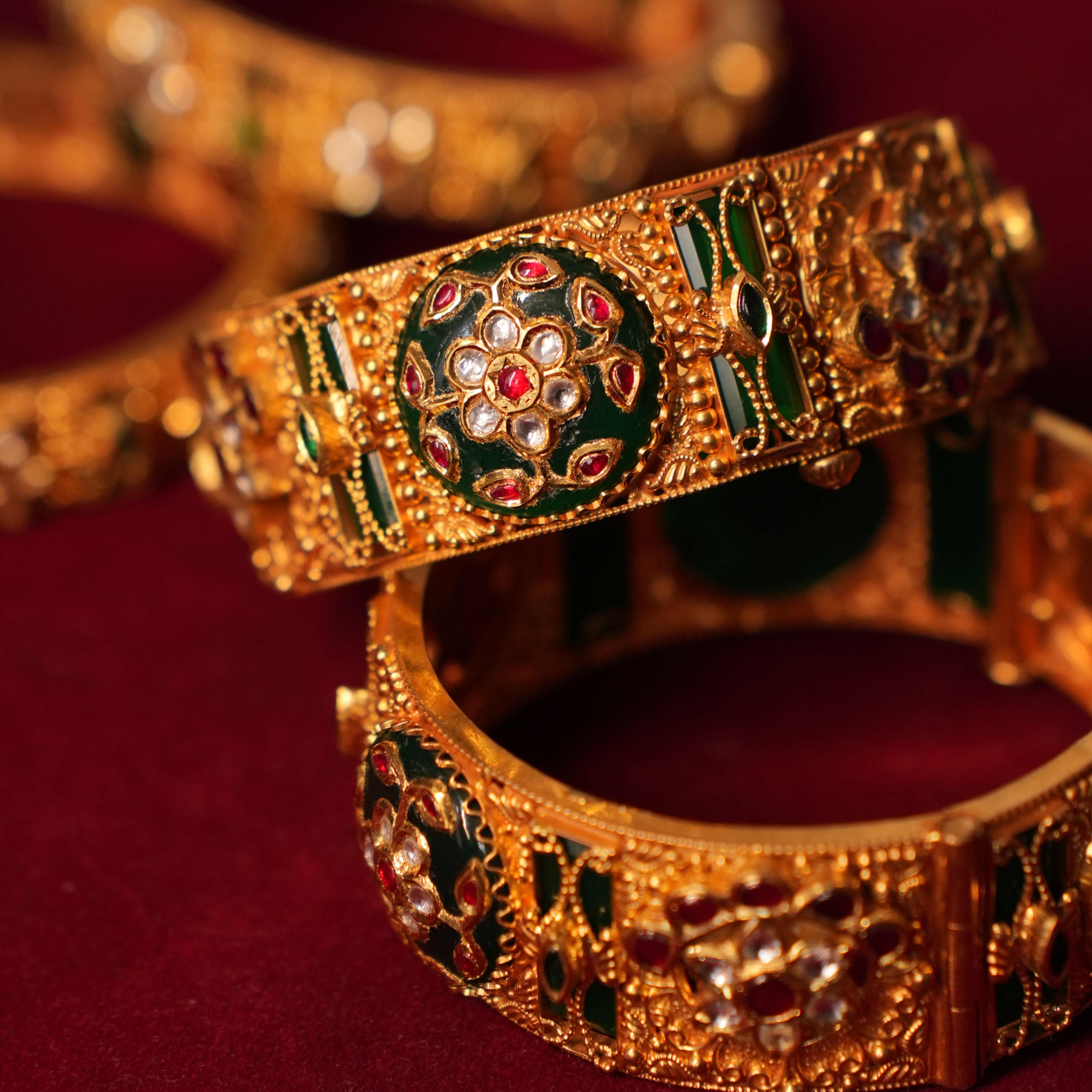
If you are considering investing in polki jewellery, understanding grades is not optional - it is essential. The difference between the highest and lowest grade of polki can mean a tenfold difference in price and a generational difference in how the piece ages. Yet this is information that most jewellers do not volunteer, and most buyers do not know to ask about.
What "Uncut Polki" Actually Means
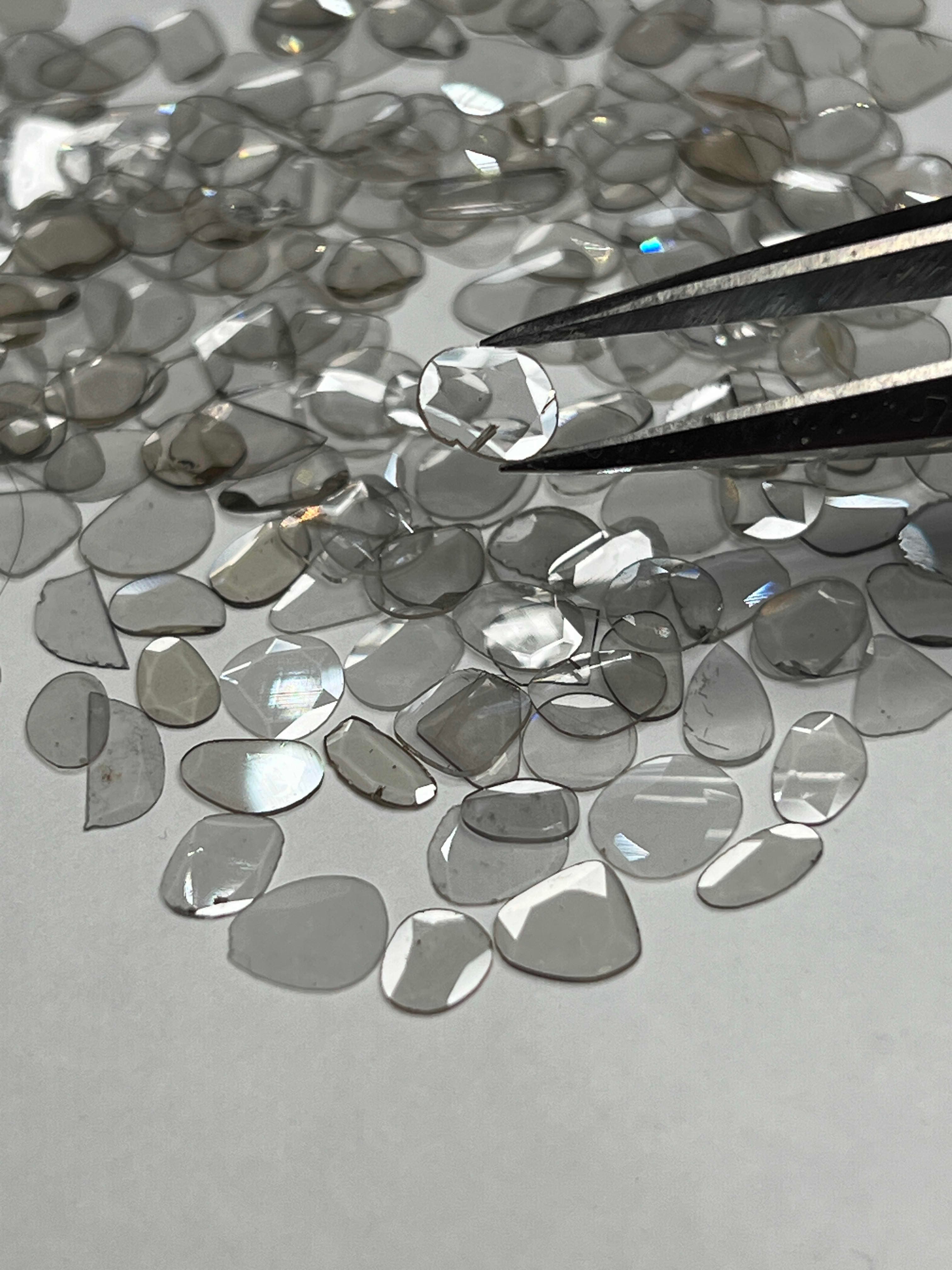
Polki diamonds are natural, uncut diamonds used in their raw, flat crystal form. Unlike brilliant-cut diamonds, they are not faceted or polished to maximise sparkle. Instead, they have a softer, more organic lustre - a warm glow rather than a sharp fire. This natural quality is precisely what makes polki so prized in heritage jewellery.
However, "uncut" does not mean "ungraded." The quality, clarity, and origin of polki diamonds vary enormously, and these differences directly affect the beauty and value of the finished piece.
The Three Grades Explained
Syndicate Polki - This is the highest grade, sourced from established diamond syndicates (historically De Beers-controlled channels). Syndicate polki stones are characterised by exceptional natural clarity, a clean white or slightly warm colour, and a consistent, flat crystal structure that sits beautifully in a jadau setting. These stones have a natural transparency that allows light to pass through them with a gentle, ethereal glow. Syndicate polki is the most expensive grade and is used in heirloom-quality bridal pieces.
Zimbabwe Polki - The middle grade, named for the African mining regions from which many of these stones originate. Zimbabwe polki has good clarity but may show more natural inclusions than syndicate stones. The colour can range from white to slightly yellowish. It offers a strong balance of beauty and value and is widely used in quality jewellery that does not require the premium of top-grade stones.
Khilwas Polki - The most affordable grade. Khilwas stones tend to be more opaque, with visible inclusions and a milkier appearance. They are often used in jewellery where the overall design and gold work are the primary visual elements, with the stones playing a supporting role.
Understanding Filling Treatments
This is where buying polki becomes complicated - and where trust in your jeweller matters most. Many polki stones undergo "filling" treatments to enhance their apparent clarity:
30% filling - A light treatment that enhances the stone's natural lustre without fundamentally altering its appearance. Some purists accept this level of treatment as standard industry practice.
60% filling - A moderate treatment that noticeably improves clarity. The stone will look significantly better than its natural state, but this enhancement may not be permanent over decades.
80% filling - Heavy treatment that can make a lower-grade stone appear much clearer than it naturally is. These stones may cloud or change appearance over time, particularly with exposure to heat during repairs or resizing.
Non-filling (natural) - Untreated polki in its natural state. This is the most valuable and honest option. The stone you see is the stone you get, and it will look the same in fifty years as it does today.
How to Spot Treated Stones
While definitive identification requires expertise, there are signs an informed buyer can look for:
Heavily filled polki often has an unnaturally uniform clarity - it looks "too perfect" for an uncut stone. Natural polki has character: slight variations in transparency, tiny natural inclusions, and an organic quality that comes from being a product of nature rather than a factory.
Ask your jeweller directly about filling percentage. A trustworthy jeweller will answer openly. Evasion or vagueness on this question is itself a useful data point.
Questions to Ask Your Jeweller
Before purchasing polki jewellery, arm yourself with these questions:
What grade is this polki - Syndicate, Zimbabwe, or Khilwas? What is the filling percentage? Is the piece accompanied by any documentation of stone quality? What is your exchange or buy-back policy? Can you show me the difference between grades side by side?
A jeweller who welcomes these questions and answers them with clarity is a jeweller who respects both the craft and the customer.
Why Provenance and Trust Matter
Unlike certified solitaire diamonds with GIA or IGI reports, polki does not have a standardised global certification system. This means that the buyer's primary protection is the integrity and reputation of their jeweller. At SHRIVATSA, we are transparent about the grade and treatment status of every polki stone we use. We work predominantly with syndicate and high-quality Zimbabwe polki, and we specify the filling status of every piece. Our commitment is simple: you should know exactly what you are buying.